Feeder Pillar Panel Kenya | Outdoor Power Distribution Solutions
Feeder pillar panels are essential infrastructure for ensuring stable, efficient, and safe outdoor power distribution in Kenya’s rapidly growing industrial and urban environments.
Unstable power supply, frequent outages, voltage fluctuations, and harsh environmental conditions remain major challenges for industrial and commercial facilities in Kenya and across East Africa. From Nairobi’s rapidly growing industrial zones to coastal developments in Mombasa and humid conditions in Kisumu, reliable outdoor power distribution is no longer optional—it is critical.
A Feeder Pillar Panel in Kenya plays a vital role in ensuring safe, efficient, and structured outdoor electrical distribution. These panels act as robust junction points that distribute electrical power from a main source to multiple outgoing circuits, especially in outdoor or semi-exposed environments.
Related Products

Feeder Pillar Panels
Feeder pillar panels providing reliable power distribution solutions for outdoor and indoor industrial and commercial applications.
View Product
LV Panel
High-quality low voltage panels designed for reliable power distribution and protection in industrial and commercial installations.
View Product
Distribution Boards
Distribution boards divide the main electrical power supply into smaller circuits while providing circuit protection for residential, commercial and industrial applications.
View Product
Panels For Data Centers
Specialised low voltage panels designed for data centre power distribution, ensuring high reliability and redundancy.
View ProductIn modern infrastructure such as malls, gated communities, factories, street lighting systems, and commercial complexes, feeder pillar panels provide the backbone of safe and controlled energy distribution.
For engineered and IEC-compliant solutions, explore our core electrical systems at
Electrical Products & Panels Overview
Shop Industrial Electrical Solutions
WHAT IS A FEEDER PILLAR PANEL?
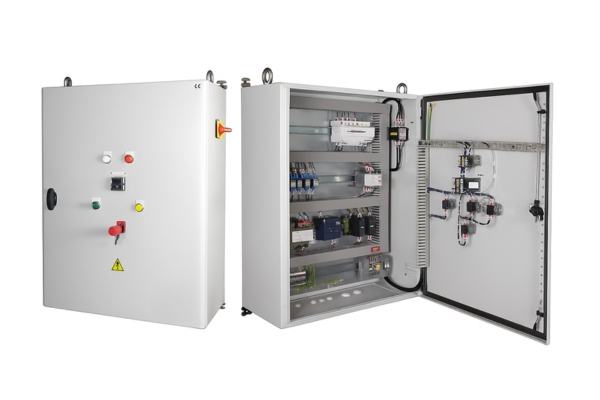
A feeder pillar panel is an outdoor-rated electrical enclosure designed to distribute power from a main supply to multiple outgoing feeders. It is commonly installed at ground level and built to withstand environmental exposure such as rain, dust, heat, and corrosion.
Key Functions:
- Power distribution to multiple loads
- Circuit protection via breakers and fuses
- Isolation and maintenance control
- Load balancing across electrical networks
These systems are widely used in industrial estates, residential estates, hospitals, airports, and commercial infrastructure across Kenya.
HOW DOES A FEEDER PILLAR PANEL WORK?
A feeder pillar panel receives electrical power from a primary source such as a transformer or main distribution board. Inside the panel, the power is divided into multiple outgoing circuits using protective devices.
Basic Operation Flow:
- Incoming power enters through the main isolator
- Power passes through protective devices (MCBs/MCCBs/fuses)
- Distribution terminals split power into outgoing feeders
- Each feeder supplies a specific load or zone
To understand integration with broader systems, explore:
Electrical Distribution Solutions
Advanced Power Systems Overview
KEY COMPONENTS OF FEEDER PILLAR PANELS
A high-quality feeder pillar panel includes:
- Main isolator switch
- MCCBs / MCBs for protection
- Busbars for current distribution
- Surge protection devices (SPD)
- Weatherproof enclosure (IP54–IP65)
- Cable glands and terminal blocks
- Earthing system
Material Construction:
- Powder-coated mild steel or stainless steel
- Anti-corrosion coating for coastal regions (Mombasa, Malindi)
- UV-resistant outdoor finishing
BENEFITS OF FEEDER PILLAR PANELS IN KENYA
1. Reliable Outdoor Power Distribution
Essential for estates, factories, and commercial lighting systems.
2. Weather Resistance
Designed for Kenya’s diverse climates—humid coastal regions, dusty industrial zones, and high-heat environments.
3. Improved Electrical Safety
Reduces risk of overloads, short circuits, and fire hazards.
4. Easy Maintenance
Centralized control allows quick isolation and servicing.
5. Scalability
Supports expansion in growing developments across Nairobi, Eldoret, and Kisumu.
APPLICATIONS OF FEEDER PILLAR PANELS
Feeder pillar panels are widely used across multiple sectors:
Industrial Applications
- Manufacturing plants
- Processing factories
- Warehouses
Commercial Applications
- Shopping malls
- Office complexes
- Parking systems
Residential Applications
- Gated communities
- Apartment complexes
- Street lighting systems
Public Infrastructure
- Road lighting networks
- Airports
- Hospitals
For more industrial-grade systems:
Browse Industrial Electrical Products
Smart Electrical Components
COMMON MISTAKES IN FEEDER PILLAR INSTALLATION
Many electrical failures in Kenya result from poor installation practices:
- Undersized cables leading to overheating
- Lack of proper earthing systems
- Using non-IP-rated enclosures outdoors
- Poor load balancing between feeders
- Ignoring surge protection in lightning-prone regions
Avoid these mistakes by working with certified engineers experienced in industrial electrical installation in Kenya.
COST CONSIDERATIONS IN KENYA
The cost of feeder pillar panels in Kenya depends on:
- Panel size and number of feeders
- Material (mild steel vs stainless steel)
- Protection level (IP rating)
- Automation features
- Project complexity
Market Insight (Kenya & East Africa):
- Small panels: Residential estates
- Medium panels: Commercial buildings
- Large panels: Industrial plants and infrastructure projects
TECHNICAL EXPERT INSIGHTS (ELECTRICAL ENGINEERING VIEW)
Feeder pillar panels must comply with international standards to ensure safety and reliability.
IEC Compliance:
- IEC 61439 – Low-voltage switchgear assemblies
- IEC 60529 – IP protection ratings
- IEC 60947 – Circuit protection devices
Design Considerations:
- Load diversity factor calculations
- Fault level withstand capacity
- Thermal management for hot climates
- Corrosion resistance for coastal Kenya
Environmental Engineering Factors:
- High humidity in Mombasa requires sealed enclosures
- Dust protection is critical in industrial Nairobi and Athi River zones
- Temperature variation affects insulation performance
COMPARISON TABLE
| Feature | Feeder Pillar Panel | Distribution Board |
|---|---|---|
| Installation Location | Outdoor | Indoor |
| Protection Level | IP54–IP65 | IP20–IP40 |
| Usage | Street lighting, estates, industrial zones | Building internal circuits |
| Size | Large and modular | Compact |
| Weather Resistance | High | Low |
| Maintenance Access | Ground-level external | Indoor access |
STEP-BY-STEP GUIDE: HOW TO SELECT AND INSTALL A FEEDER PILLAR PANEL
Step 1: Load Assessment
Calculate total connected load and future expansion needs.
Step 2: Choose Panel Rating
Select correct current rating and IP protection level.
Step 3: Environmental Evaluation
Consider location conditions (dust, heat, humidity, corrosion).
Step 4: Circuit Design
Divide loads into balanced outgoing feeders.
Step 5: Installation & Testing
- Mount panel on concrete base
- Connect incoming and outgoing cables
- Test insulation resistance
- Verify earthing system
For professional assistance:
Contact Certified Engineers
WHY FEEDER PILLAR PANELS ARE IMPORTANT IN KENYA
Kenya’s rapid urbanization and industrial expansion demand stable outdoor power infrastructure. Cities like Nairobi, Mombasa, and Kisumu are experiencing increased electricity demand due to:
- Industrial parks and manufacturing growth
- Large residential estates
- Smart city infrastructure development
- Infrastructure upgrades across East Africa
Without feeder pillar panels, outdoor distribution systems become unsafe, inefficient, and prone to failure.
FREQUENTLY ASKED QUESTIONS ABOUT FEEDER PILLAR PANELS IN KENYA
1. What is a feeder pillar panel used for?
It is used for outdoor electrical power distribution across multiple circuits in industrial and commercial systems.
2. Where are feeder pillar panels installed?
They are installed outdoors in estates, factories, roadsides, and commercial premises.
3. Are feeder pillar panels weatherproof?
Yes, they are designed with IP54 to IP65 protection for harsh outdoor environments.
4. What is the difference between a feeder pillar and a distribution board?
Feeder pillars are outdoor-rated, while distribution boards are typically used indoors.
5. Can feeder pillar panels be customized?
Yes, they can be customized based on load, environment, and project requirements.
6. Why are they important in Kenya?
They ensure stable and safe power distribution in environments with unreliable grid conditions and harsh climates.
7. How long do feeder pillar panels last?
With proper maintenance, they can last over 15–25 years.
8. Do they require maintenance?
Yes, periodic inspection of breakers, terminals, and enclosure sealing is required.
CONCLUSION
Feeder pillar panels are a critical component of modern electrical infrastructure in Kenya and across East Africa. They provide safe, structured, and scalable outdoor power distribution for industrial, commercial, and residential applications.
As demand for reliable electricity grows in Nairobi, Mombasa, Kisumu, and Eldoret, investing in professionally engineered feeder pillar systems ensures long-term safety, efficiency, and operational continuity.
For engineered solutions that meet IEC standards and local environmental demands, Panel Tech Systems delivers trusted, durable, and high-performance electrical distribution systems.
Power Your Project with Panel Tech Systems Today!
Whether you need a single distribution board or a full industrial electrical installation, our team of certified engineers is ready to deliver a tailored solution.
✔ IEC-Certified Electrical Panels
✔ End-to-End Engineering Solutions
✔ Trusted Across Kenya & East Africa
Call Us: 0799 531765
Email: [email protected]
Visit Us: Nairobi, Kenya