Earthing and Bonding for LV Panels Kenya: Safety Guide
er earthing and bonding for LV panels Kenya installations is critical for electrical safety, fault protection, and system reliability. This guide explains TN-S, TT, and other earthing systems, protective bonding requirements, testing methods
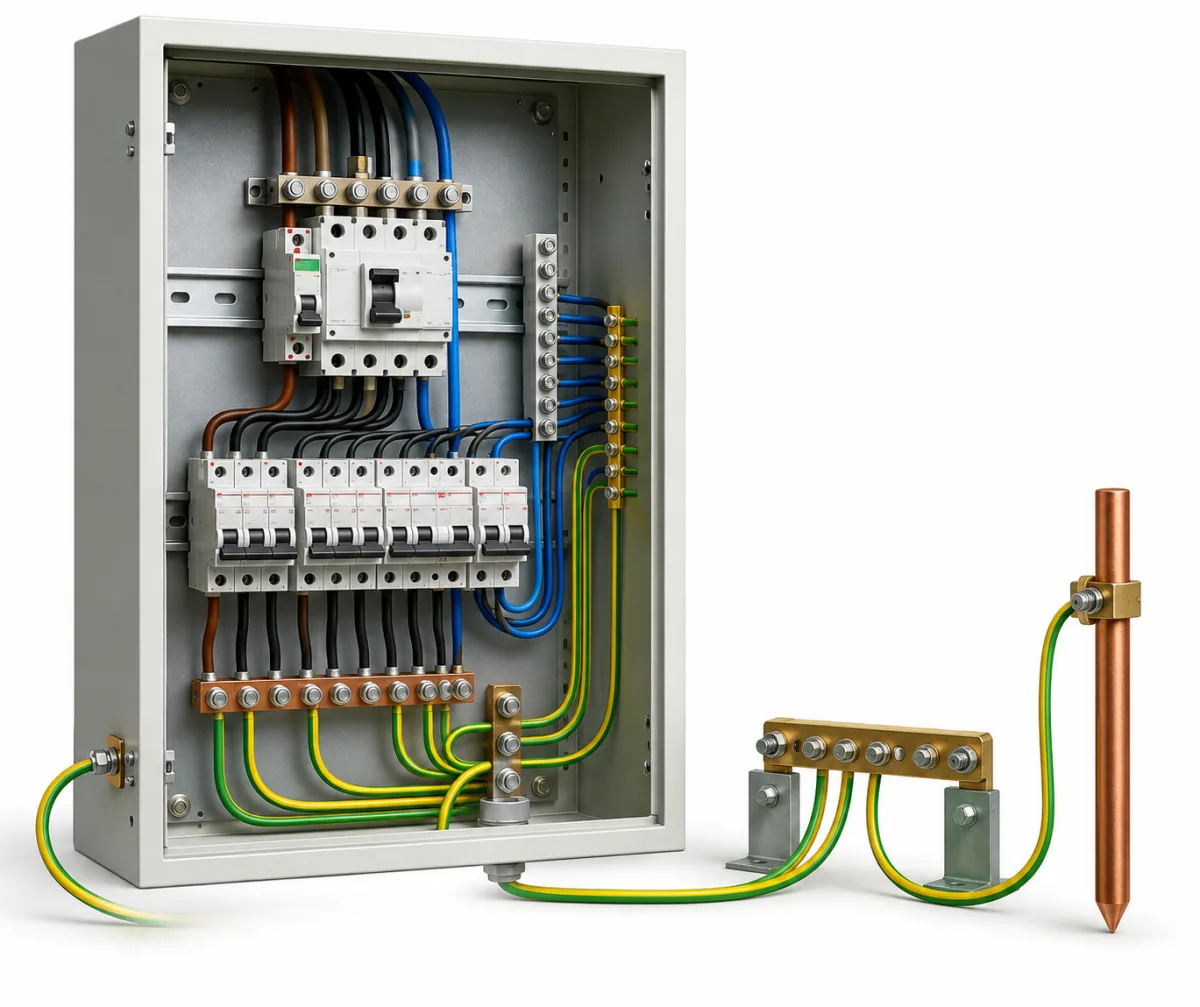
Electrical safety in modern buildings, factories, and infrastructure projects depends on more than selecting quality circuit breakers and switchgear. A reliable electrical installation requires a correctly designed earthing and bonding system that ensures fault currents are safely controlled and protective devices operate when required.
Many electrical failures occur because earthing is treated as a secondary consideration rather than a core part of system design. An LV panel with advanced protection devices can still become unsafe if the fault current path is inadequate, earth connections are poorly terminated, or metallic components are not properly bonded.
Related Products

LV Panel
High-quality low voltage panels designed for reliable power distribution and protection in industrial and commercial installations.
View Product
Feeder Pillar Panels
Feeder pillar panels providing reliable power distribution solutions for outdoor and indoor industrial and commercial applications.
View Product
PLC Automation Panels
Advanced PLC automation panels for intelligent control of industrial processes, tailored to your operational requirements.
View Product
Panels For Data Centers
Specialised low voltage panels designed for data centre power distribution, ensuring high reliability and redundancy.
View ProductUnderstanding earthing and bonding for LV panels Kenya projects require is essential for electrical engineers, MEP consultants, contractors, facility managers, and developers working on commercial and industrial installations.
In Kenya, LV electrical systems must often handle challenging operating conditions, including:
- KPLC supply fluctuations
- Generator changeover systems
- Solar PV integration
- Battery Energy Storage Systems (BESS)
- Industrial motor loads
- Sensitive automation equipment
- Coastal humidity and corrosion
- Dust conditions in industrial areas
A correctly engineered earthing system protects people, improves equipment reliability, and ensures that protection systems such as MCCBs, ACBs, RCDs, and surge protection devices perform correctly.
Paneltech Systems Ltd provides professionally engineered electrical solutions including LV switchboards, APFC panels, MCC panels, ATS systems, automation panels, and renewable energy distribution solutions. Learn more about our expertise through our electrical engineering services and company profile and explore our complete range of electrical panels and solutions.
What Is Earthing and Bonding for LV Panels?Earthing provides a safe electrical path for fault currents to flow into the ground, while bonding connects metallic parts together to prevent dangerous voltage differences. Together, they form a critical protection system for LV electrical installations.
Earthing and bonding are often discussed together, but they perform different functions.
Earthing
Earthing connects electrical systems or exposed conductive parts to the earth through a protective conductor or earth electrode system.
Its purpose is to:
- Provide a fault current path
- Allow protective devices to trip
- Reduce electric shock risk
- Stabilise system voltage
Bonding
Bonding connects conductive parts that may become energised during a fault.
Examples include:
- LV panel enclosures
- Cable trays
- Generator frames
- Motor bodies
- Metallic structures
- Equipment chassis
A properly bonded system ensures that exposed metal parts remain at a similar electrical potential during fault conditions.
Why Earthing Matters for LV Panels in KenyaProper earthing allows electrical faults to be cleared quickly by creating a low-impedance path back to the source. Without effective earthing, fault currents may remain on equipment surfaces and create serious safety risks.
Kenyan commercial and industrial facilities increasingly depend on reliable electrical infrastructure. A failure in the earthing system can affect:
- Personnel safety
- Equipment protection
- Production continuity
- Electrical system stability
Industries requiring carefully designed earthing include:
- Manufacturing plants
- Hospitals
- Data centres
- Hotels
- Shopping centres
- Water treatment facilities
- Solar installations
For example, a motor fault in an industrial plant should immediately create enough fault current for the protective breaker to disconnect the supply. If the earthing path has excessive resistance, the breaker may not trip within the required time.
This makes earthing design just as important as breaker selection.
How Earthing Protects People and Electrical EquipmentEarthing protects people by preventing dangerous touch voltages and protects equipment by ensuring faults are interrupted before causing excessive heating, fire, or component failure.
During normal operation:
- Current flows through intended conductors.
- Equipment operates normally.
- Protective systems remain inactive.
During a fault:
- A live conductor contacts a metallic enclosure.
- Fault current flows through the protective earth path.
- The circuit breaker or protective device detects the fault.
- The supply disconnects.
Without a reliable earth path, the metal enclosure may remain energised.
Which Earthing System Is Used in Kenya?The correct earthing system depends on the electrical supply arrangement, project requirements, and safety considerations. TN-S systems are commonly preferred for commercial and industrial installations, while TT systems are used where an independent earth electrode arrangement is required.
The main LV earthing arrangements include:
- TN-S
- TN-C-S
- TT
- IT systems for specialised applications
The selected earthing system should be confirmed during electrical design before manufacturing the LV panel.
Earthing and Bonding System Specifications TableA correctly designed LV panel includes properly sized protective earth conductors, earth bars, bonding connections, and testing provisions to ensure safe operation.
| Specification | Typical Requirement |
|---|---|
| System Voltage | 415V AC |
| Frequency | 50 Hz |
| Earthing Arrangement | TN-S / TN-C-S / TT |
| Earth Bar Material | Copper |
| Protective Earth Conductor | Copper |
| Panel Enclosure Bonding | Required |
| Protection Devices | MCCB / ACB / RCD |
| Testing Requirements | Earth Resistance & Continuity Tests |
| Switchboard Standard | IEC 61439 |
| Installation Standard | IEC 60364 |
A TN-S earthing system uses a separate protective earth conductor and neutral conductor throughout the installation. It provides a dependable fault path and is widely used in modern commercial and industrial electrical systems.
In a TN-S system:
- The transformer neutral is connected to earth.
- A separate PE conductor runs throughout the installation.
- Equipment enclosures connect to the PE conductor.
- Fault currents return through the protective earth path.
Advantages include:
- Faster fault clearing
- Better equipment protection
- Reduced electrical interference
- Improved compatibility with sensitive electronics
TN-S systems are commonly suitable for:
- Industrial plants
- Office buildings
- Hospitals
- Data centres
- Large commercial developments
A TT earthing system uses a local earth electrode installed at the consumer premises instead of relying on a dedicated protective earth conductor from the supply network. It is commonly used where independent grounding is required.
TT systems depend heavily on:
- Earth electrode quality
- Soil conditions
- Earth resistance values
- Correct RCD protection
Typical applications include:
- Remote installations
- Rural facilities
- Standalone power systems
- Some renewable energy projects
Because fault currents may be lower compared with TN-S systems, TT installations usually require careful protection coordination.
Contact Paneltech Systems LtdPowering Kenya's Future with Reliable Electrical Solutions
Email: [email protected]
Phone: 0799 531765
Location: Nairobi, Kenya
Website: https://paneltechsystems.co.ke/
Our Specialized Services:
- Low Voltage (LV) Panels & APFC Panels
- VFD Drive Solutions & ATS / MTS Systems
- Solar Power & EV Charging Infrastructure
- Electrical Supplies & Engineering Consultations