IEC 61439 vs BS EN 60439: Which Standard Applies in Kenya?
BS EN 60439 was superseded by IEC 61439 in 2014, but the old standard still appears in specifications. Here's how the two compare, what changed, and what Kenyan project specifications should reference today.
IEC 61439 is the current international standard for low-voltage switchgear and control assemblies, published in stages between 2009 and 2014. It replaced BS EN 60439, which was withdrawn in 2014. Any new specification written today should reference IEC 61439, but BS EN 60439 still appears in older Kenyan project documents and refurbishment scopes — so panel manufacturers and consultants need to know both.
The headline change: from TTA/PTTA to design verification
BS EN 60439 split assemblies into two categories: Type-Tested Assemblies (TTA), which had to pass a defined set of physical tests, and Partially Type-Tested Assemblies (PTTA), which combined type-tested elements with calculation-verified extrapolations. This created a grey zone — manufacturers and inspectors argued about which tests had been "really" done versus calculated.
Related Products
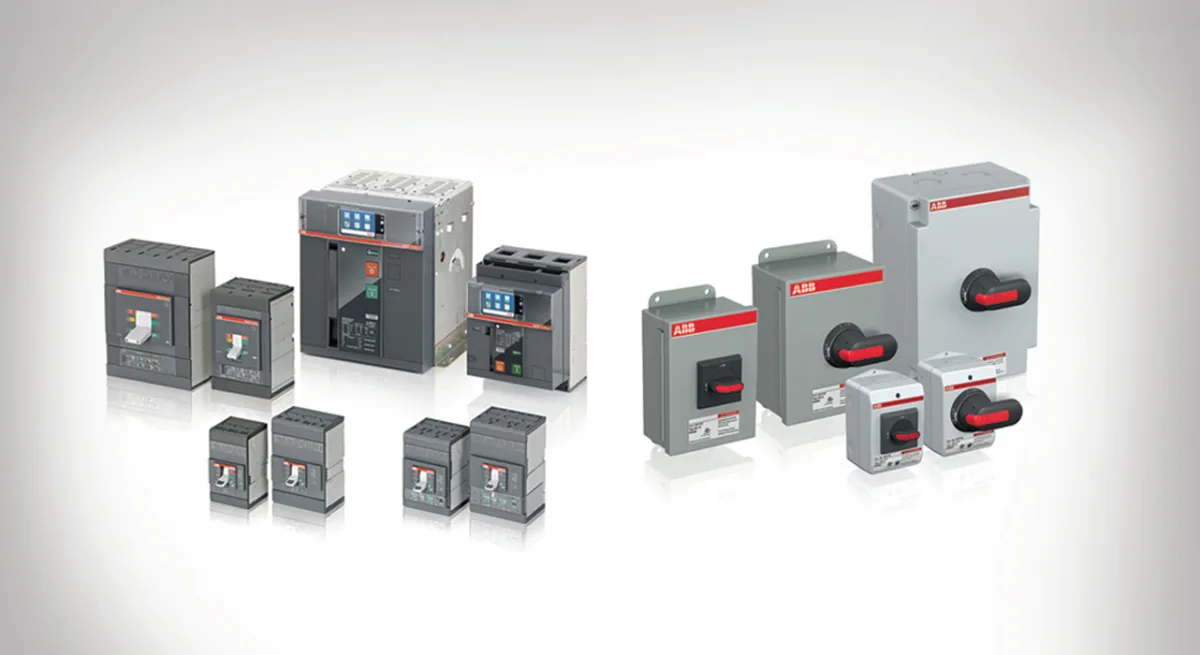
Switchgear Components
A comprehensive range of switchgear components for electrical control and protection in industrial and commercial installations.
View Product
ATS / MTS Kenya
ATS/MTS solutions from Paneltech Systems provide reliable Automatic and Manual Transfer Switches for seamless power transfer in industrial and commercial electrical systems.
View Product
Distribution Boards
Distribution boards divide the main electrical power supply into smaller circuits while providing circuit protection for residential, commercial and industrial applications.
View Product
Feeder Pillar Panels
Feeder pillar panels providing reliable power distribution solutions for outdoor and indoor industrial and commercial applications.
View ProductIEC 61439 abolishes that split. Every assembly is verified against the standard, but verification can come from three sources — testing, calculation, or satisfying design rules — and the manufacturer must document which method was used for each verification clause. The phrase "type-tested" no longer carries formal meaning under the new standard, although it remains in common usage.
The new family structure
IEC 61439 is a multi-part standard:
- IEC 61439-1 — General rules for low-voltage switchgear and control assemblies. Every other part references back to this one.
- IEC 61439-2 — Power switchgear and control assemblies (PSC-assemblies). This is what most LV panels in industrial and commercial installations comply with.
- IEC 61439-3 — Distribution boards intended to be operated by ordinary persons (DBO-assemblies). Domestic and small-commercial consumer units.
- IEC 61439-4 — Assemblies for construction sites (ACS-assemblies). Rugged, weather-resistant.
- IEC 61439-5 — Assemblies for power distribution in public networks. KPLC-style street distribution.
- IEC 61439-6 — Busbar trunking systems (BTS).
- IEC 61439-7 — Assemblies for specific applications (marinas, EV charging, etc.).
Old BS EN 60439 had a similar split (-1, -2, -3, -4, -5) but the alignment with IEC 61439 isn't one-to-one and the verification clauses differ.
Roles: original manufacturer vs assembly manufacturer
IEC 61439 introduces an important distinction:
- The original manufacturer designs and verifies the system — usually a switchgear OEM like ABB, Schneider, or Siemens with their proprietary panel system (e.g. ArTu, Prisma, Sivacon).
- The assembly manufacturer takes the original manufacturer's system, configures it for a specific project, and is responsible for that assembly's compliance.
This matters in Kenya because most LV panels delivered to projects here are built by local assembly manufacturers (like Panel Tech Systems) using internationally recognised system platforms. The local builder is the assembly manufacturer; the system platform comes with documentation from the original manufacturer; together they meet IEC 61439.
The 13 verifications
IEC 61439-2 requires verification of 13 design characteristics. For each, the standard sets a verification method (test, calculation, or design rule):
- Strength of materials and parts (corrosion, IP rating, lifting, impact)
- Degree of protection (IP code) of enclosure
- Clearances and creepage distances
- Protection against electric shock and circuit integrity
- Incorporation of switching devices and components
- Internal electrical circuits and connections
- Terminals for external conductors
- Dielectric properties (insulation withstand)
- Temperature rise (heat dissipation under load)
- Short-circuit withstand strength
- Electromagnetic compatibility (EMC)
- Mechanical operation
- Wiring, operational performance and function
Of these, temperature rise and short-circuit withstand are typically where compliance gets argued. Calculation methods exist for both and are widely used in production runs, but the methods have boundary conditions (busbar geometry, busbar coating, enclosure ventilation, ambient temperature) outside which they cease to be valid.
What this means for Kenyan project specifications
- Write new specs to IEC 61439. Specifically IEC 61439-1 + IEC 61439-2 for power switchgear, and IEC 61439-3 for residential/small commercial distribution boards.
- Demand documented verification. Ask the assembly manufacturer for the verification matrix — which method was used (test/calc/rule) for each of the 13 characteristics, and the supporting evidence.
- Don't conflate "type tested" with "compliant". An assembly using calculation for temperature rise is fully compliant if the calculation is within its boundary conditions; insisting on "fully type tested" only is now over-specification.
- For refurbishment, retain BS EN 60439 references where they appear in original drawings. Modifications to a BS EN 60439 board should be assessed in their original framework unless the whole panel is being rebuilt.
- KEBS and EPRA accept both standards. Practically, IEC 61439 is the modern reference for both.
Quick reference: equivalent terms
| BS EN 60439 term | IEC 61439 term |
|---|---|
| Type-Tested Assembly (TTA) | Design-verified assembly (verification by test) |
| Partially Type-Tested Assembly (PTTA) | Design-verified assembly (verification by calculation / rule) |
| Routine tests | Routine verification (largely unchanged) |
| Form 1 / 2a / 2b / 3a / 3b / 4a / 4b separation | Same Form designation, refined definitions |
| Functional unit | Functional unit (unchanged) |
Bottom line
BS EN 60439 is withdrawn. IEC 61439 is the standard you specify, build to, and inspect against today. The new framework gives the assembly manufacturer more verification flexibility (calculation and design rules count alongside testing) but demands a clear written verification trail. Specifying IEC 61439-1 + the appropriate part 2/3/4/5 is now the default for any new electrical project in Kenya and East Africa.
See our LV switchgear capabilities — every panel we build is verified to IEC 61439 with documentation handed over at FAT.


