ATS vs MTS vs STS: Choosing the Right Transfer Switch for Your Facility
A practical comparison of Automatic Transfer Switches, Manual Transfer Switches, and Static Transfer Switches. Transfer time, application fit, sizing rules, and what each one really does.
ATS (Automatic Transfer Switch) moves load between two power sources automatically, typically in 0.1–10 seconds. MTS (Manual Transfer Switch) does the same job but requires an operator to throw the switch. STS (Static Transfer Switch) uses solid-state thyristors to transfer load in under 8 milliseconds — fast enough that IT loads don't see the transfer. The right choice depends on three things: how fast the load must transfer, whether the loss of supply will be detected automatically, and whether you need uninterrupted transfer for critical electronics.
Side-by-side comparison
| Aspect | MTS | ATS | STS |
|---|---|---|---|
| Transfer mechanism | Mechanical switch + handle | Motorised contactor / breaker | Solid-state thyristors |
| Triggered by | Operator | Voltage / frequency sensing | Real-time voltage anomaly detection |
| Transfer time | Operator-dependent (seconds to minutes) | 0.1–10 s (open transition) 0–100 ms (closed transition) | 2–8 ms |
| Break in supply during transfer | Yes (open transition only) | Yes for open transition; near-zero for closed transition | No (load never loses voltage) |
| Maximum continuous current | Up to 6300 A | Up to 6300 A | Typically 100–800 A |
| Typical use case | Small commercial, redundancy backup | Hospitals, industrial, commercial backup | Data centres, IT loads, sensitive instrumentation |
| Cost | Lowest | Medium | Highest (often 3–5× ATS) |
| Maintenance | Lowest | Periodic exercise + service | Thyristor monitoring required |
Manual Transfer Switch (MTS)
An MTS is a heavy-duty changeover switch with a single operating handle that moves the load from source A (mains) to source B (generator), or back. There's no intelligence in the switch itself — when the operator throws it, the contacts move. The supply is briefly interrupted during the throw, typically for the time it takes to move the handle past centre position.
Related Products

ATS / MTS Kenya
ATS/MTS solutions from Paneltech Systems provide reliable Automatic and Manual Transfer Switches for seamless power transfer in industrial and commercial electrical systems.
View Product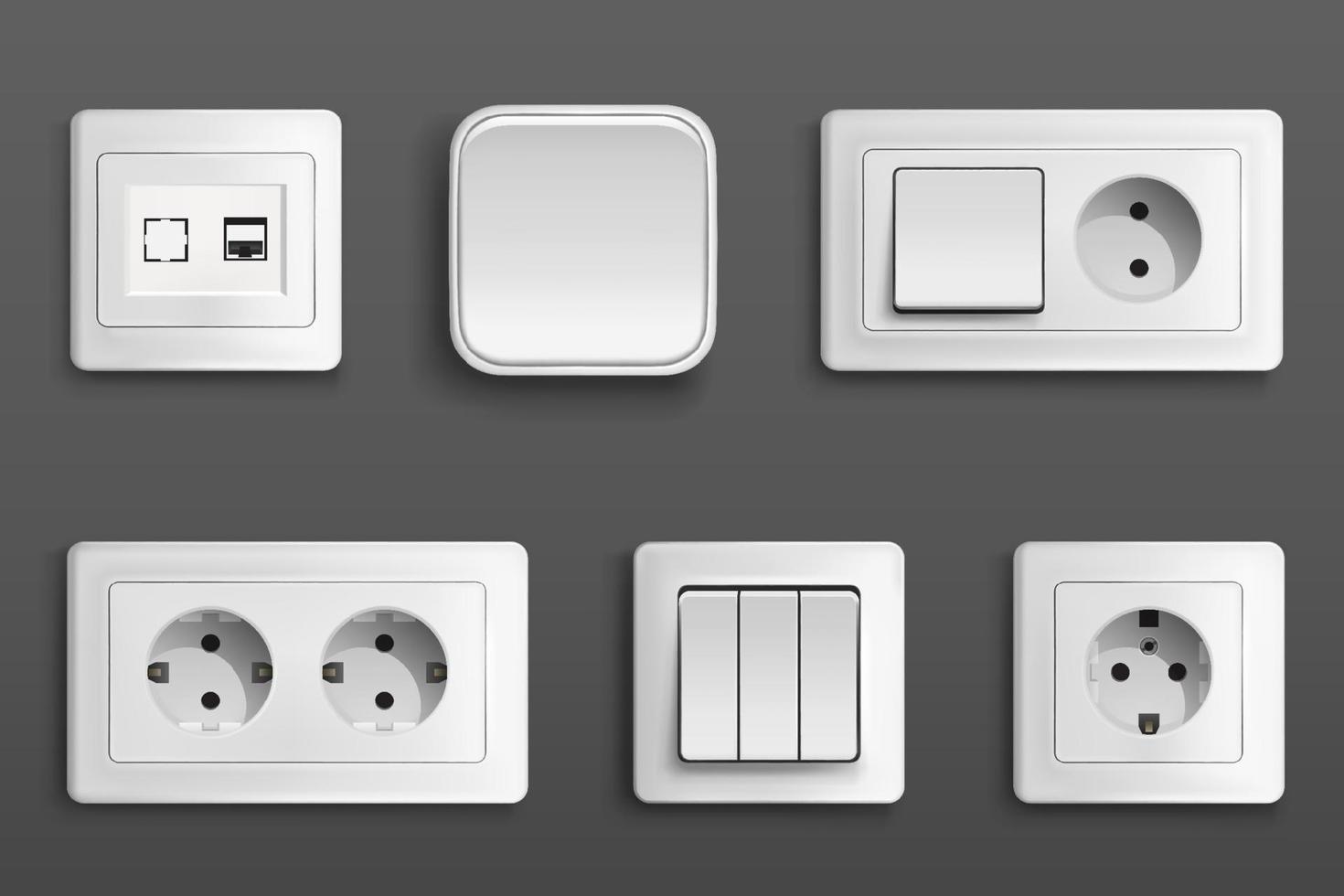
Switches and Sockets
Quality switches and sockets for residential, commercial and industrial electrical installations.
View Product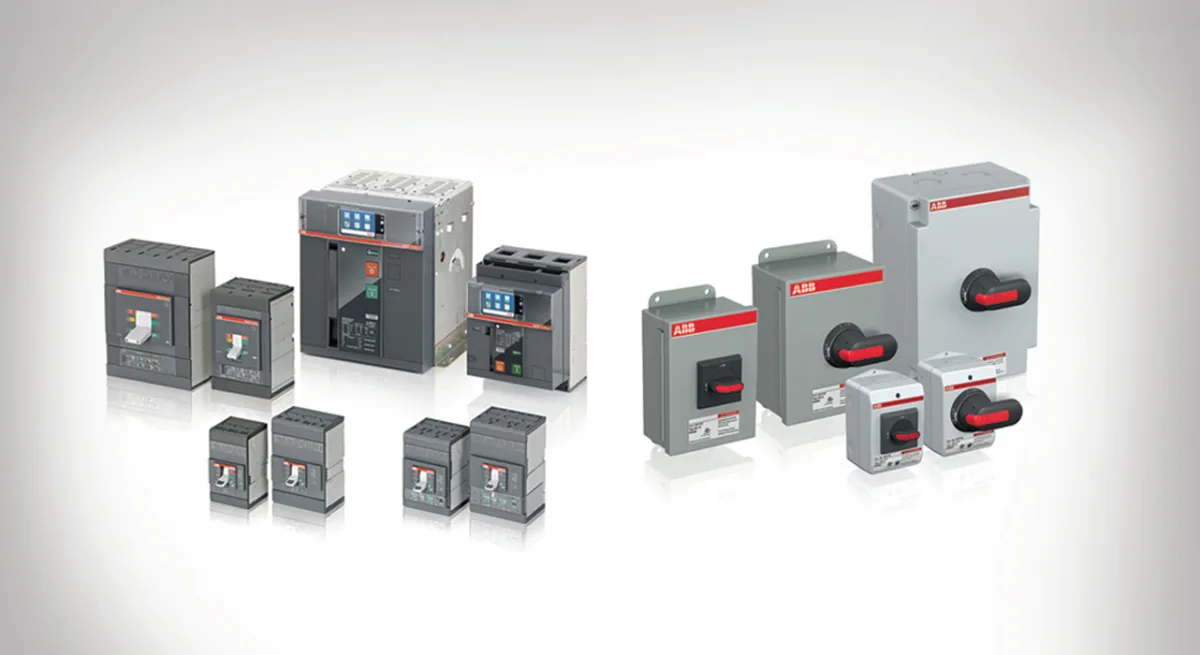
Switchgear Components
A comprehensive range of switchgear components for electrical control and protection in industrial and commercial installations.
View Product
PFC
Power Factor Correction panels designed to improve power quality and reduce energy costs in industrial installations.
View ProductMTS suits installations where:
- Power outages are short and infrequent — the operator can decide whether to start the generator at all
- An operator is always on site (factories with maintenance crews, larger commercial buildings)
- Cost matters more than transfer time — MTS is the cheapest option by a wide margin
- The generator is not always sized for the whole load — an operator can shed non-essential loads before transferring
MTS is also a sensible backup for ATS systems: many critical facilities install an MTS bypass around the ATS so the load can be transferred even when the ATS itself fails.
Automatic Transfer Switch (ATS)
An ATS continuously monitors the primary source and, when it detects loss of voltage or out-of-spec frequency, starts the standby generator and transfers the load once the generator is at rated voltage and frequency. When the primary returns, the ATS waits for a stable period (typically 5 minutes) before transferring back and shutting the generator down.
Modern ATS panels offer several transfer modes:
- Open transition (break-before-make) — opens the source A connection before closing source B. Brief interruption (a few hundred milliseconds). Standard for most installations.
- Closed transition (make-before-break) — momentarily parallels the two sources before opening the outgoing source. Zero interruption to the load. Requires synchronisation between sources, so generator must be in-phase with mains. Used in hospitals and data centres.
- Soft loading / soft unloading — gradually ramps load between sources to avoid step-load shocks on the generator.
- Programmed transition — brief mid-position delay to allow large motor loads to spin down before re-energisation. Protects motor windings from out-of-phase reclosing.
An ATS is the right choice for:
- Hospitals — life-safety loads must be re-energised within 10 seconds (NFPA 110), critical loads typically within 4 seconds
- Commercial buildings — lifts, fire pumps, emergency lighting need automatic backup
- Manufacturing plants — process continuity, no operator standby
- Telecoms and broadcasting — service uptime requirements
- Office and education campuses — keeping IT and HVAC running through outages
Static Transfer Switch (STS)
An STS uses two sets of back-to-back thyristors, one set per source, with control logic that fires whichever set is currently feeding the load. When the active source goes out of spec, the alternate set fires within microseconds and the load draws from the new source. The transfer is so fast that even sensitive computer equipment doesn't see it — the UPS or PSU output buffer caps absorb the few milliseconds of changeover.
STS is critical where:
- Data centres need dual-source feeds to each IT rack — STS guarantees no transfer outage even on transfer
- IT loads are downstream of two parallel UPS chains — STS picks whichever chain is healthy
- Hospital theatres and ICU equipment need uninterrupted transfer between UPS and clean mains
- Sensitive instrumentation (laboratory equipment, MRI scanners) cannot tolerate even brief interruption
STS is rarely used as a primary mains/generator transfer because thyristor systems aren't practical above ~800 A and add cost and complexity. Most STS deployments are downstream of an ATS, sitting between the UPS layer and the IT load.
Sizing rules
Whichever type you specify, size for:
- Continuous current rating at least 110% of the total continuous downstream load
- Withstand and closing rating (WCR) at the prospective short-circuit current at the switch — published in kArms for a defined duration (typically 30 cycles for 100% WCR)
- Coordination with upstream protection — the breaker upstream of the switch must clear faults faster than the switch's withstand rating allows
- Motor inrush — if motor loads are a large share, derate the continuous rating or specify motor-rated switches
- Cycle time — for frequent transfers, mechanical ATS may wear out; use solid-state ATS or STS
Decision matrix
- Can the load tolerate any interruption?
- No → STS (downstream of ATS) or closed-transition ATS
- Brief interruption acceptable → ATS open-transition
- Longer interruption acceptable, operator on site → MTS
- Will an operator always be available within 30 minutes of an outage?
- No → ATS
- Yes, and outages are infrequent → MTS may suffice
- Is the facility regulated? (hospitals, data centres, telcos)
- Yes → ATS with closed-transition mode is usually required by code; STS for the most critical loads
- Are there motor loads >50% of total load?
- Yes → ATS with programmed-transition mode to protect against out-of-phase reclosing
Common Kenyan installations
- Private hospitals (50–500 kVA): Open-transition ATS for general loads; closed-transition or STS for OT/ICU
- Hotels (200–800 kVA): Open-transition ATS with priority load shedding
- Commercial offices (50–300 kVA): Open-transition ATS, sometimes MTS bypass for maintenance
- Data centres / colocation: Open-transition ATS on incoming mains, then dual UPS, then STS at the IT rack PDU
- Small workshops (≤50 kVA): MTS, with the operator deciding when to start the generator
- Cellular base stations: Open-transition ATS with battery bridging
Bottom line
MTS for when an operator can throw the handle and a few seconds of outage doesn't matter. ATS for almost everything else, with closed transition where load continuity matters. STS for the small fraction of loads — typically IT equipment in data centres or critical medical devices — where even milliseconds of interruption can cause downtime.
See our ATS / MTS panel solutions for sizing assistance, generator sync engineering, and turnkey installation across hospitals, commercial buildings, and data centres in Kenya and East Africa.